


Mountain huts in Slovenia: a complete guide for hikers
Mountain huts in Slovenia, known asplaninske koče, are a key part of the hiking experience in the country. Spread across all major mountain areas – from the Julian Alps to the Kamnik–Savinja Alps – they form a dense and well-organised network that makes multi-day trekking in alpine environments possible.
Anyone planning a walking holiday in Slovenia will likely wonder what to expect from the huts: how comfortable they are, how overnight stays work, and which rules are important to know before setting off. This article offers a comprehensive overview, designed both for first-time visitors and for experienced hikers looking for in-depth information.
What areplaninske koče?
Slovenian mountain huts are managed by local alpine clubs under the coordination of thePlaninska Zveza Slovenije, the Slovenian Alpine Association.
Their primary role is to provideshelter, food, information and supportto hikers, while also playing an important role in mountain safety.
There are more than 170 huts, shelters and bivouacs in Slovenia. This extensive system makes the country especially suitable formulti-day hut-to-hut trekking, allowing hikers to move from one hut to the next without returning to the valleys each day.

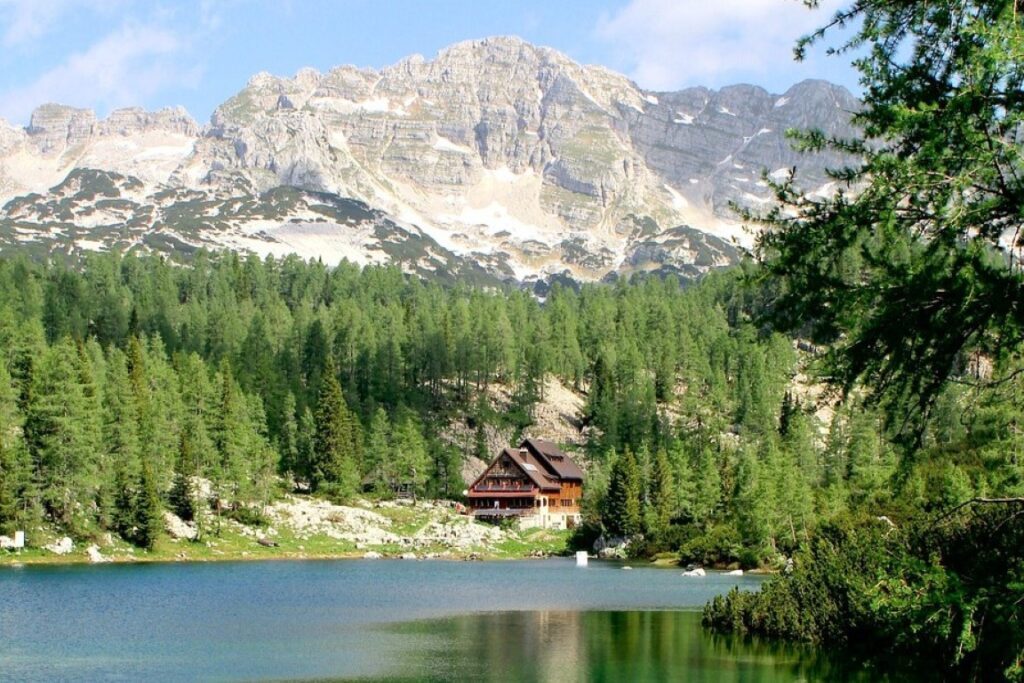
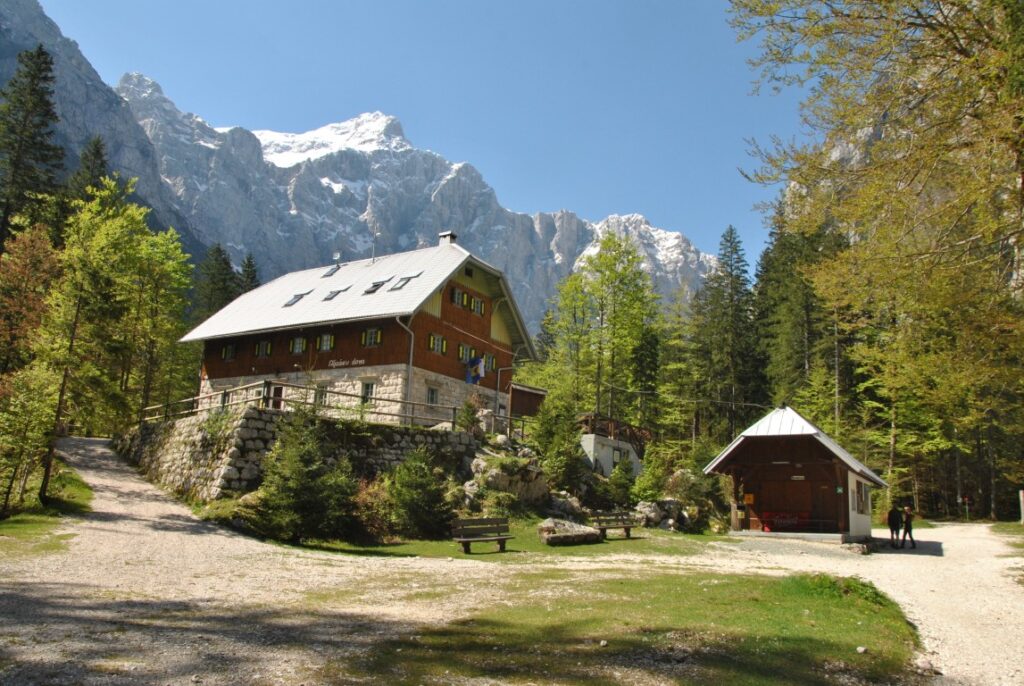
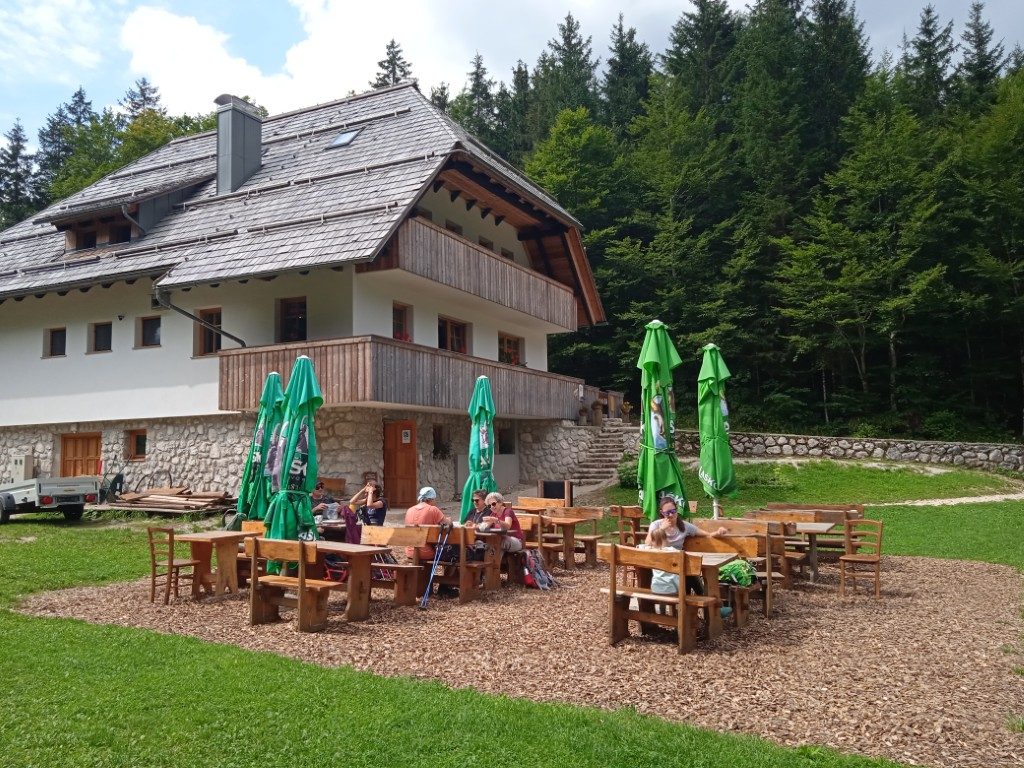
Mountain huts as part of Slovenian alpine culture
Planinske kočeare not just tourist facilities, but places deeply rooted in Slovenian alpine culture. Historically created as shelters for those living and working in the mountains, they have evolved into welcoming spaces built around sharing, simplicity and collective responsibility.
The atmosphere in Slovenian huts is usually informal and sociable. Sharing a table with other hikers, exchanging information about trail conditions or the weather, and treating the hut as a communal space rather than a hotel are all part of the experience. This philosophy is actively promoted by thePlaninska Zveza Slovenije, which defines behavioural guidelines and a shared vision of huts as cultural and environmental landmarks.
Sleeping in mountain huts in Slovenia
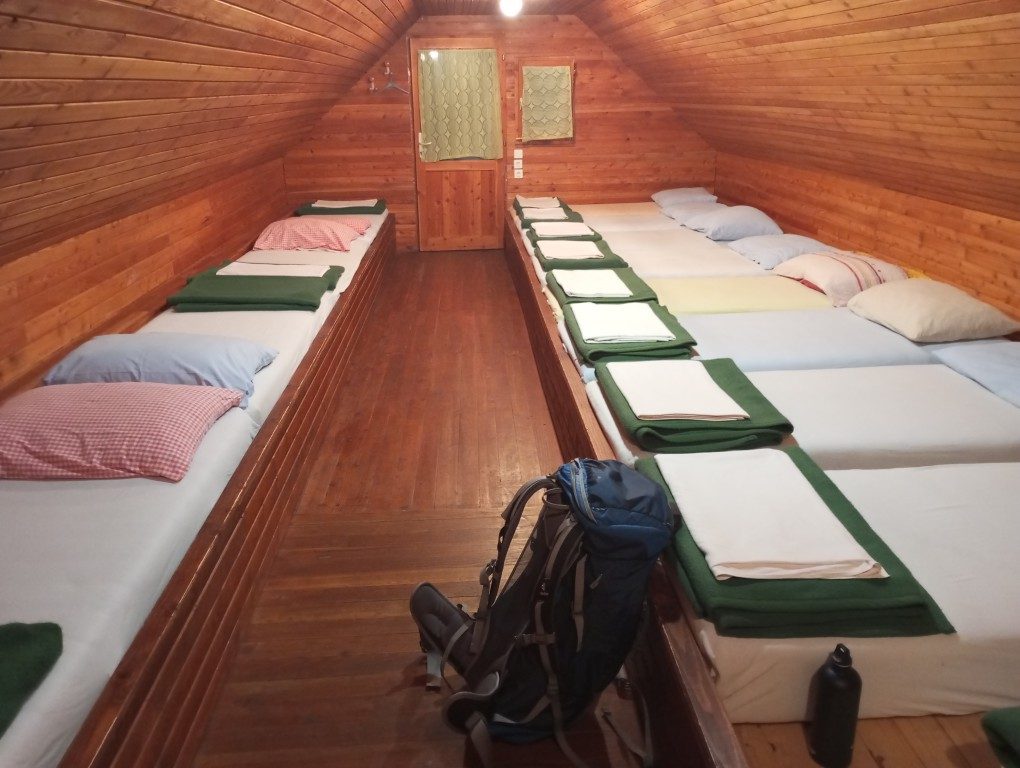
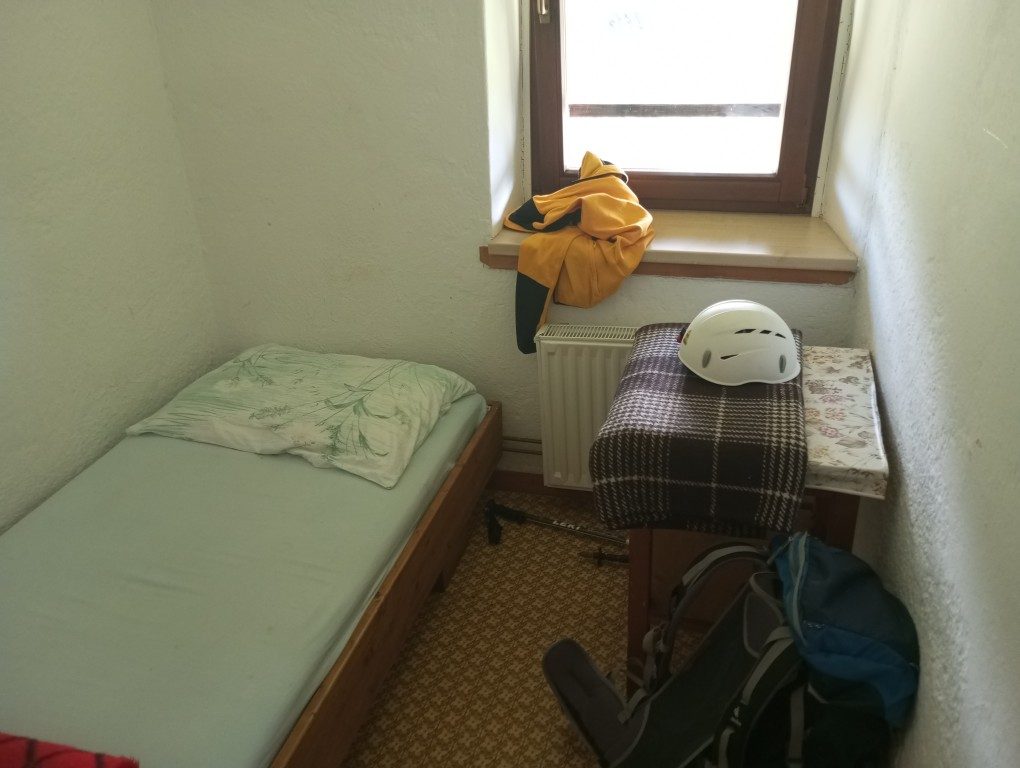
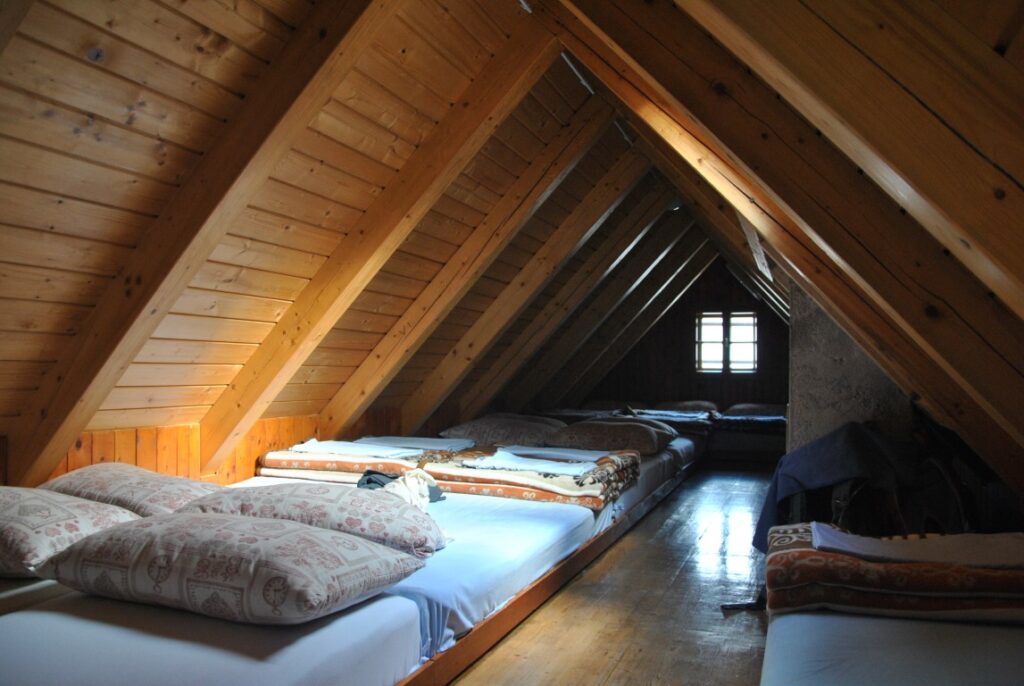
Accommodation in Slovenian mountain huts is generally simple but practical. The most common options are:
- Shared dormitories(skupna ležišča)
- Private rooms(sobe), fewer in number and more expensive
Blankets and pillows are always provided, but the use of asleeping bag lineris mandatory (you can bring your own or rent one at the hut for a small fee). Hiking boots are not allowed in sleeping areas; hikers usually change footwear at the entrance, often using hut slippers.
Drinking water: what you need to know
Water is a precious resource in Slovenian mountain huts, especially at higher altitudes.
- In lower huts,drinking wateris often available from taps.
- In high-altitude huts, water may come from rainwater collection systems andis not always potable.
Clear signs are used:
- pitna voda= drinking water
- voda ni pitna= non-potable water
In many cases, hikers need tobuy drinking waterat the hut or refill bottles at marked springs along the trail.
Facilities and comfort: realistic expectations
Comfort levels vary depending on the hut’s location:
- More accessible huts may have running water, proper bathrooms and sometimes showers (often for an extra charge).
- High mountain huts usually have limited water supply, and electricity is commonly produced by solar panels.
Charging electronic devices is not always possible, so carrying apower bankis recommended. Card payments cannot be relied upon everywhere;cashis essential.
Food in Slovenian mountain huts
Food is an integral part of the hut experience in Slovenia and reflects the country’salpine culinary tradition: simple, hearty dishes designed to restore energy after long days on the trail.
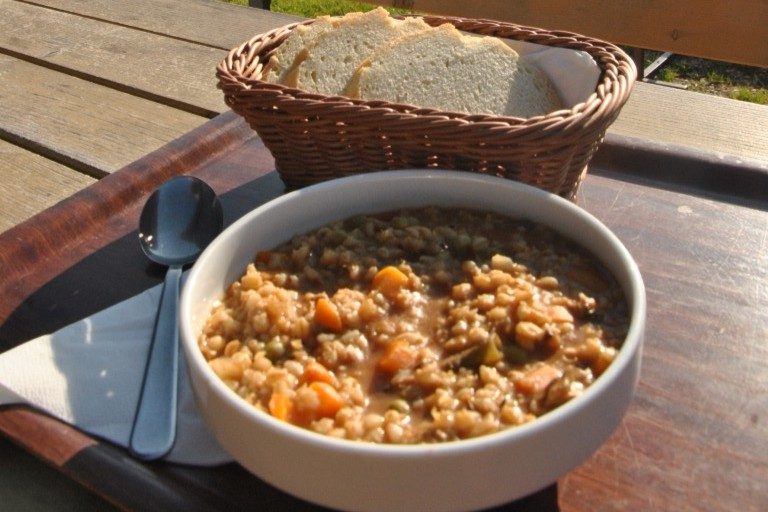
Most huts serve hot, filling meals, often including traditional “spoon dishes” such asjota(a soup made with sauerkraut, beans and potatoes) andričet(barley stew with vegetables and legumes), alongside daily soups. Sausages, stews, eggs and other substantial one-plate meals are also common.
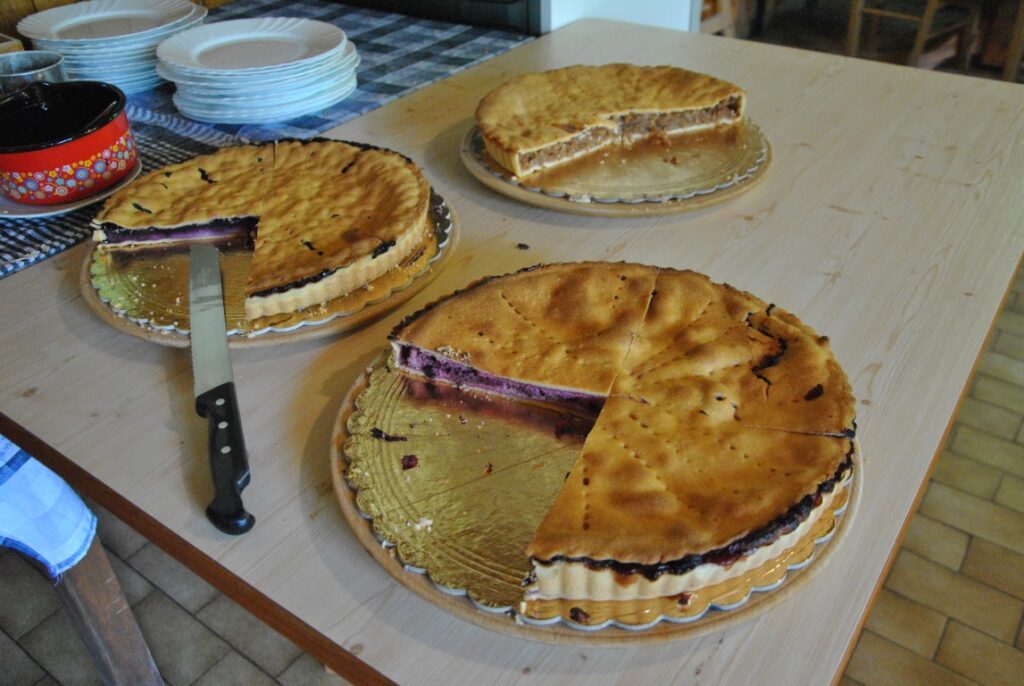
Traditional desserts play an important role.Štruklji(rolled dumplings, often filled with cottage cheese or nuts) andzavitek(strudel) are among the most popular and are a welcome reward at the end of a long hiking day.
Vegetarian options are usually available, especially in lower or busier huts, while vegan options may be limited, particularly at higher elevations. Menu variety depends strongly on location and supply logistics: in more remote huts the choice may be minimal, but always focused on providing sufficient calories for hikers.
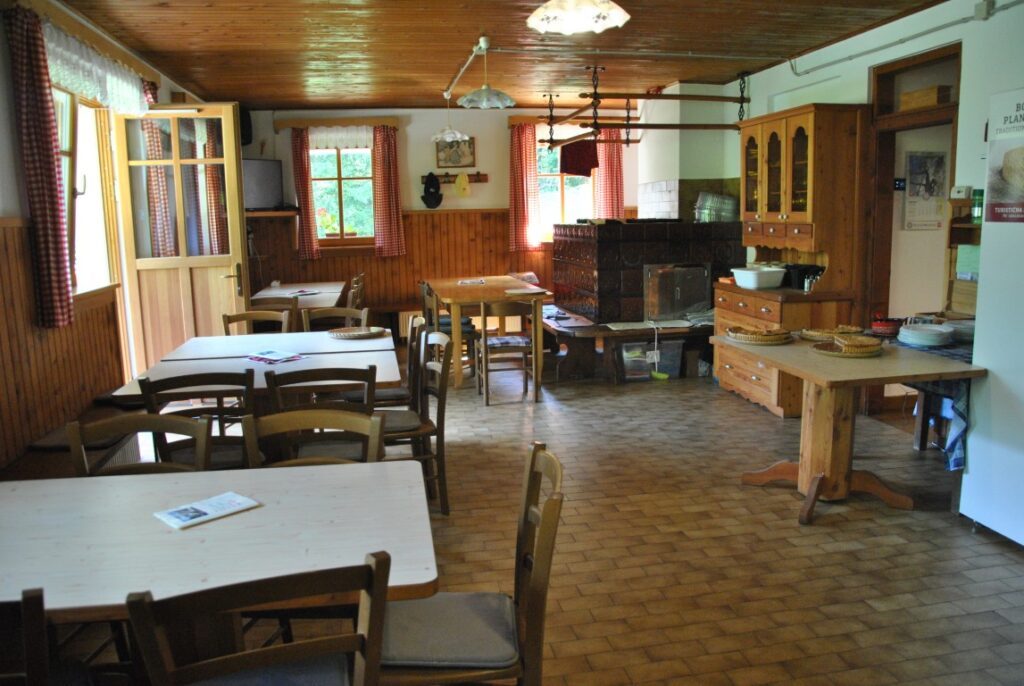
All huts serve hot drinks such as tea, coffee and often hot chocolate. Coffee is usually prepared in a traditional style; espresso machines are rare in high mountain huts. Evenings are often spent in the common dining room, sharing tables and conversations with hikers from all over the world – an essential part of the mountain hut experience in Slovenia.
Discounts and alpine club membership
Overnight stays in Slovenian mountain huts arecheaper for members of alpine clubs. Discounts apply to:
- Members of the Slovenian Alpine Association
- Members of alpine clubs with reciprocal agreements (including CAI, ÖAV, DAV, SAC and others)
Avalid membership cardmust be presented at check-in to receive the discounted rate.
Categories of mountain huts: not all huts are the same
Slovenian mountain huts are classified according to their location and accessibility:
- Category I huts: high mountain huts, not accessible by public roads, often supplied by helicopter or cable systems
- Category II huts: located in mid or high mountain areas, with easier access
- Category III huts: generally lower and more easily reachable
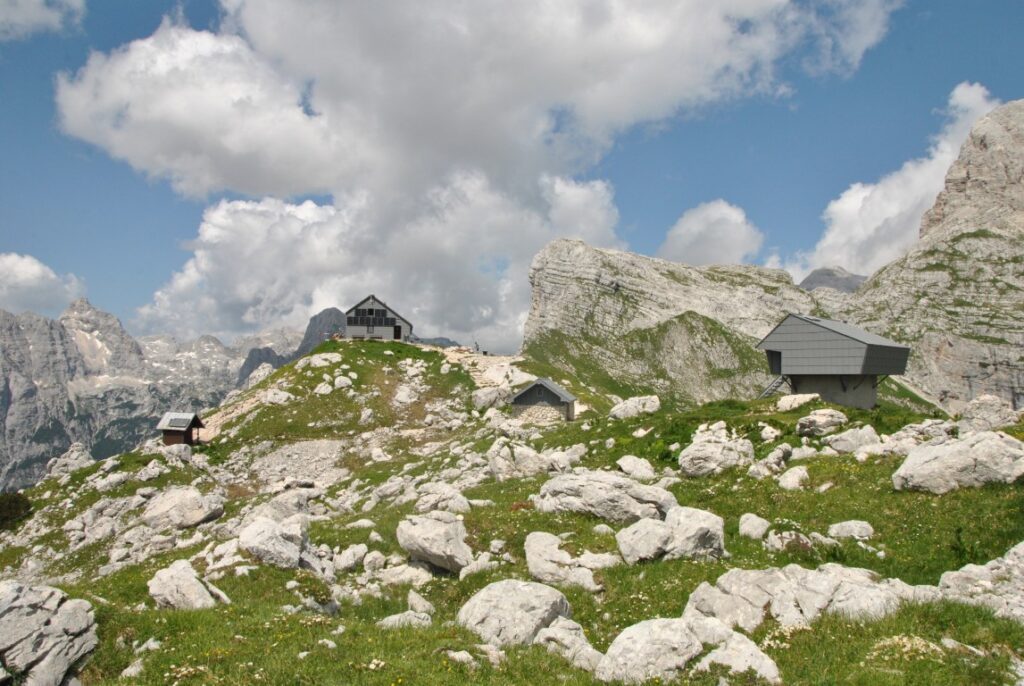
- Bivouacs (bivaki): very basic emergency shelters
Understanding these categories helps set realistic expectations and is essential when planning a hut-to-hut trek.
Bivouacs and winter rooms (zimska soba)
Many high-altitude huts close during winter, but some provide an unlockedwinter room(zimska soba). These are very basic spaces with limited sleeping capacity and no services, intended strictly asemergency shelters.
Camping and sleeping outdoors
Wild camping and unauthorised bivouacking arenot allowed in Sloveniaoutside designated areas.
WithinTriglav National Park, regulations are particularly strict and also prohibit sleeping in vehicles at trailhead parking areas.
In the mountains, overnight stays are therefore permittedonly in official mountain huts and bivouacs
Family-friendly mountain huts
Some Slovenian mountain huts have been awarded afamily-friendly certification, aimed at welcoming families with children. These huts pay special attention to younger hikers, sometimes offering suitable facilities, child-friendly portions and a particularly welcoming atmosphere, making the mountains accessible to families as well.
Two iconic huts: from the highest to the lowest
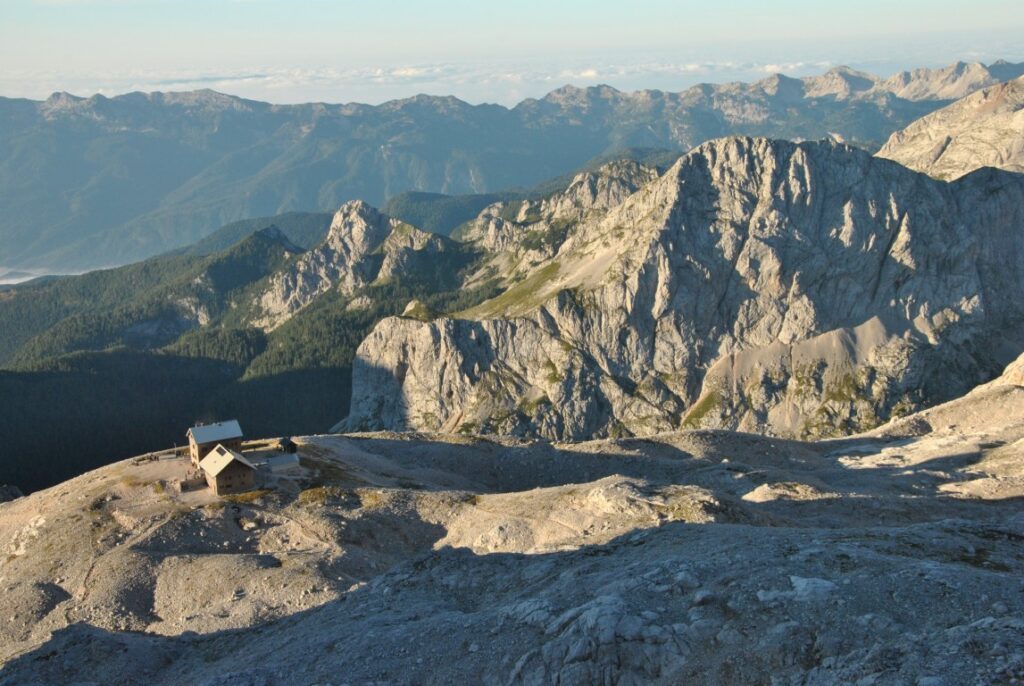
The highest mountain hut in Slovenia isTriglavski dom na Kredarici, located at 2,515 m below Mount Triglav. It is one of the most iconic huts in the country and a true symbol of Slovenian mountaineering, as well as a key base for ascents of Slovenia’s highest peak.
At the opposite end of the spectrum isMengeška koča(433 m), considered the lowest mountain hut in Slovenia. Surprisingly, it is not near the sea but on the hills north of Ljubljana, highlighting how widespread and deeply rooted the hut system is, even at lower elevations.
Mountain huts and hut-to-hut trekking in Slovenia
Thanks to its well-distributed hut network and excellent trail marking, Slovenia is an ideal destination forhut-to-hut trekking. Walking from one hut to the next allows hikers to experience the mountains continuously, following a natural rhythm of walking, resting and moving on.
👉 A practical example is ourhut-to-hut trekking itinerary in Slovenia, specifically designed around the mountain hut system and ideal for hikers seeking an authentic and well-organised experience.
Frequently asked questions about mountain huts in Slovenia
No. Wild camping and unauthorised bivouacking are not allowed. Overnight stays are permitted only in official mountain huts and bivouacs. In Triglav National Park, regulations are particularly strict.
In high season, especially in July and August, booking is strongly recommended, particularly for popular huts. Many huts now offer online reservations through the official alpine association system.
It depends on the hut. Lower huts often have drinking water, while high-altitude huts may not. Non-potable water is clearly marked, and drinking water may need to be purchased.
Yes. Members of alpine clubs with reciprocal agreements are entitled to discounted overnight rates, provided they show a valid membership card.
Yes. Some huts are officially certified as family-friendly and are particularly welcoming to families with children.
Conclusion
Mountain huts in Slovenia are far more than simple places to sleep. They are an essential part of the walking experience, offering shelter, safety and a way of enjoying the mountains based on simplicity, respect and shared values.
With the right information and careful planning, a hut-to-hut trek in Slovenia becomes a rich and memorable journey, suitable for both beginners and experienced hikers.
Further reading: an authoritative guide to the Julian Alps
For those wishing to prepare in greater depth, an authoritative reference isWalking the Julian Alps of Slovenia, published by Cicerone Press.
👉 We talk about it in more detail ina dedicated article on our blog, explaining the background of the guide and its value as a resource based on direct, on-the-ground experience.